Like us, plants need nutrients to be able to grow, produce fruit and thrive. But what’s the best time to feed vegetable plants in a UK garden?
If you’r new to vegetable growing, you’ve probably asked yourself this question already. Most gardeners understand feeding their plants as using liquid fertiliser at various stages of growth.
However, it might surprise you that feeding vegetable plants starts much earlier than this. In fact, it starts before you have even sown the seeds.
So we have put together this guide to explain when to feed vegetable plants, how and with what.
Feeding Timetable: The Best Time To Feed Vegetable Plants In A UK Garden
When we talk about feeding plants, many gardeners think about liquid fertiliser that they add once a vegetable plant has started fruiting, such as with tomatoes, courgettes, or cucumbers.
But to ensure that our veggie plants have all the nutrients they need, feeding needs to start much earlier, and it all starts with the soil. After all, that’s where the plants get their nutrients from.
To ensure you have healthy soil, you want to mimic nature as much as possible and ensure that the soil has the nutrients your plants need as soon as they are planted out or germinate.
So there isn’t one best time to feed veg plants, instead, it’s a process that starts before you have even sown the first seed:
- Autumn/winter – replenish the soil and improve soil structure
- Spring – replenish soil and suppress weeds
- Summer – add nutrients according to plants needs
Let’s look at each of these stages in detail, so you know exactly what to do, when to do it and what type of feed you need.
1. Autumn/Winter – Replenish Soil
| When | End of growing season when beds are empty |
| What | Organic matter, such as garden compost or well-rotted manure |
| How | Dig in or add 5cm layer for no-dig gardens |
When plants drop their leaves in autumn, they fall to the ground where they are turned into soil by the many organisms that live underneath our feet, including earthworms, fungi, insects and bacteria.
By doing so, they release the nutrients that were in the leaves and add them to the soil.
This is nature’s way to replenish the soil and give the plants what they need to start growing new leaves and flowers, and produce seeds or fruits. We want to replicate this in our vegetable gardens.
So after you have removed or cut down your veg plants at the end of the season, you add organic matter to the empty beds. You can either dig it in, or just add a 5cm layer of it to your beds, if you have a no-dig garden.

We use our homemade compost, or even better worm compost, but any peat-free compost or well-rotted manure will do for this.
Over the next few months, the organisms in your soil will work this organic matter to release nutrients into your soil. At the same time, it will help to improve the soil structure (Shepard and Webb, 20026), increasing its ability to retain water, as well as stopping it from getting compacted.
Studies have shown that the addition of fresh organic matter as part of the natural cycle, increases the biodiversity of the soil microbiome making the soil healthier (Sun et al, 2020).
This means that by adding organic matter to your soil, you feed the microorganisms that live in the soil. This is vital, because they are the ones that convert the nutrients into a form that can be absorbed by plants.
This is the first stage of feeding your vegetable plants, and you haven’t even sown any seeds for the next growing season.
What’s important is that the soil isn’t frozen when you add the organic matter, as this will keep the soil frozen for longer and prevent nutrients passing into it.
2. Spring – Replenish And Suppress
| When | Spring – after you weeded your beds |
| What | Mulch – such as leaf mulch |
| How | a layer of about 2cm |
In spring, when everything springs back to life, add a layer of mulch, such as leaf mulch to your beds after weeding.
As we have already added organic matter in autumn, a layer of about 2cm should be enough, if you have removed all the weeds. If not, you might want to add a thicker layer, about 5cm, to ensure the weeds get starved of light.
Personally, I prefer to remove the weeds and opt for a thinner layer, but if you have enough mulch and can’t be bothered to weed first, this is an option.

Mulching will do several things:
- Add more nutrients as leaves break down – this will provide nutrients slowly into summer
- Suppress weeds – reduces the need for weeding
- Warm up the soil – so that any seeds you decide to sow, such as carrots or beetroots, germinate quicker
- Water retention – keeps the soil nice and moist for any plants you put in
Leaf mulch is less nutrient-rich than compost, but as we have already added compost in autumn/winter, this little top up is just what’s needed.
Apart from leaf mulch there are other options. We have put together a list of the best natural mulches for vegetable beds for you to choose from.
You can then plant straight into the mulch, knowing that your veg plants will have all they need.
3. Summer – Liquid Feed
| When | At seedling stage and at fruiting stage |
| What | Liquid fertiliser |
| How | Mix with water and water from below |
Now we get to what most gardeners think of when you talk about feeding plants: feeding plants with liquid fertiliser.
If you have prepared your soil as we have described in step 1 and 2, many vegetables won’t need to be fed with liquid fertiliser, as they have all the nutrients they need already in the soil.
These include carrots, beetroots, garlic, onions, and leeks. However, other more hungry veggies will benefit from getting additional food over summer, such as tomatoes, cucumbers, courgettes, pumpkins, peppers, aubergines, chillies, melons, etc.
Liquid feed is normally added at two stages of the growing process: at seedling stage and when flower/fruiting starts.
Nitrogen At Seedling Stage
After germination, plants put all their energy into growing and producing foliage, which they need to photosynthesise. For this they need the important nutrient nitrogen. (Guan et al., 2025)
So to give seedlings and young plants a boost, I feed them with a nitrogen-rich liquid fertiliser when I repot them the first time. It’s important not to overfeed your plants, so don’t be tempted to feed them too often.
envii SeaFeed Xtra – Organic Seaweed Fertiliser
- Boosts Plant Growth & Crop Yields – Natural Seaweed fertiliser that enhances strong & healthy plant growth, promotes lush foliage, and increases crop yields for thriving plants.
- Nutrient Rich Plant Food – Enriched with iron and plant-based amino acids to nourish garden plants, improve soil health, and support plant & root development.
- Versatile & All Purpose – Ideal for lawns, fruits, vegetables, flowers, trees, and all other garden plants. Perfect for any outdoor or indoor plants.
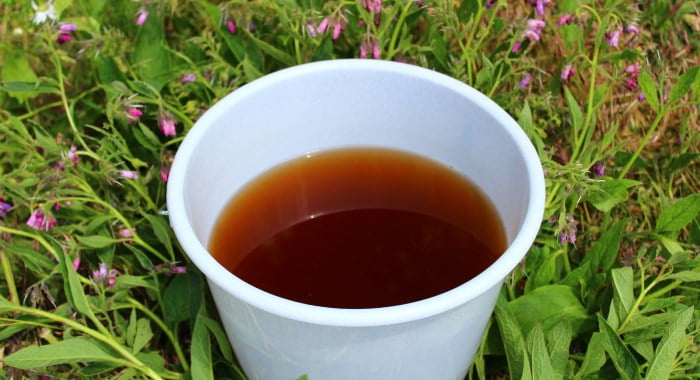
I prefer to make my own liquid feed from weeds in spring. These are rich in nitrogen, so produce a fertiliser that’s ideal for young plants. Head to our guide about the best liquid fertilisers to find out how to make it.
Plants where you eat the leaves, such as salads, will benefit from being fed once after germination and again about 3 weeks later with a nitrogen-rich feed.
Potassium At Fruiting Stage
For veggies where you eat the fruits, the needs change once they have started to flower/fruiting. At this stage, they need a nutrient called potash or potassium, that supports the growth of fruits. (Zain et Ismail, 2015)
This means for plants like tomatoes, courgettes, cucumbers, pumpkins, aubergines, chillies, peppers, etc. you need a fertiliser that is rich in potassium, when flowering/fruiting has started.
How often you feed them will depend on how well you have prepared your soil and their needs. For example, once every two weeks for tomatoes and once a week for courgettes.
It’s important that you don’t overfeed your plants, as this can be just as bad as them not having enough nutrients.
Levington Tomorite Concentrated Plant Food, 2.5L, Red
- The country’s favourite liquid concentrate plant food
- Produces 50 percent more yield
- For delicious tasting tomatoes and other vegetables
If you want to make your own potash-rich feed, use comfrey leaves or banana peel to make your homemade liquid fertiliser.
Take Care Of Your Soil Microbiome
Like our gut, garden soil is home to millions of microorganisms including bacteria, viruses, and fungi. The more diverse this community of tiny organisms is, the better.
They are vital for the health of your soil. (Shah et al., 2021) And as you probably know, healthy soil is the basis for healthy vegetable plants.
So when we think about feeding our plants, we should also think about feeding the microbes in the soil. Here are some of the things the soil microorganisms do to keep your veg plants healthy:
- Support soil’s ability to regulate carbon – the building block of all life (Demyanyuk et al., 2019)
- Convert nutrients like nitrogen and phosphorous in the soil into a form plants can absorb them (Khan et al., 2017)
- Support plant growth – keeping plants healthy and resilient (Compant et al., 2019)
- Help mitigate the effects of climate change on your plants (Allsup et al., 2023)
So how do you take care of your soil’s microbiome?
- Turn your garden into a no-dig garden – as digging disturbs the microorganisms (Griffith and Philippot, 2013)
- Fertilise your soil naturally – use homemade compost, homemade organic liquid fertilisers sand natural mulches
- Stop using pesticides – they reduce the amount of soil bacteria and microorganisms in your garden (Hussain et al., 2009)
- Plant different plants in the same bed – this increases the biodiversity in the soil (Hermans et al., 2023)
- Practice crop rotation – this also increases the diversity of soil microorganisms and soil bacteria (Shah et al., 2021)
So here you have it, the best time to feed vegetable plants in a UK garden starts earlier than you think. Start by feeding the soil microbiome, so they can take care of your plants.
With this as your basis, you can be sure that your vegetable plants will thrive. Happy Growing!