
Tomatoes are one of the most grown plants in UK vegetable gardens. And it’s easy to see why, as homegrown tomatoes will beat shop-bought ones every time.
Originally coming from South America, they are today as common in our gardens as English lavender. They are suitable for beginners as well as seasoned gardeners and can thrive in our climate.
For anyone who wants to attempt it, we have collated and answered all common questions about growing tomato plants in the UK.
Is It Easy To Grow Tomatoes In The UK?

Yes, is the simple answer. While they do need some care and attention, there is nothing difficult about growing them. Here are our top tips to grow tomatoes in the UK successfully:
- Provide indeterminate tomato plants with good support, such as bamboo canes
- Snip off stems that grow between leaves to keep the plant tidier and focussing on producing fruit
- Snip off the top of indeterminate tomato plants once they have reached the top of their support
- Water regularly and feed once a week when they have started flowering
If you follow these tips, you’ll be sure to have a bumper crop each year.
If you’re a beginner, you might prefer starting with a determinate variety as there’s less maintenance involved. You’ll get a small yield, but it’s easier to keep on top of things.
What’s The Difference Between Indeterminate And Determinate Tomatoes?
Like with many other vegetables, there are two types of tomato plants: indeterminate or cordon and determinate or bush.
The main difference lies in the way they grow. Indeterminate tomatoes will grow until the first frost, which will kill them. Determinate tomatoes will only grow to a certain size. They also grow bushy, rather than upwards, as the name suggests.
Because they grow differently, they need different care. Cordon tomatoes need to be supported, such as with bamboo canes. As the plants grow, attach them lightly to the canes.
One important task you have to carry out when growing indeterminate tomatoes is to pinch out side shoots, “inbetweeners” as I like to call them. They grow between the main stem and a leaf.
If you don’t do this, the tomato plant will continue to grow more and more side shoots and focus less on growing fruits. I check all my tomato plants for “inbetweeners” once a week to keep them tidy.
Once the cordon tomato plant has reached the end of the support, or has grown five trusses of fruit (in a greenhouse or polytunnels it can be six), snip off the top of the plant. This will stop it from growing taller.
It will continue to grow side shoots though, so keep an eye out for those “inbetweeners”.
In contrast, bushy tomatoes will only grow about 100cm (40in) give or take. They don’t need pruning like indeterminate varieties.
Because they grow differently, cordon varieties will keep producing fruit into autumn. Determinate tomato plants, on the other hand, will grow to their full size, start flowering and produce fruit.
Once these are all picked, that’s it. The plant is done.
As a consequence, bushy plants will give you a smaller crop and will finish cropping earlier than cordon plants.
Should I Grow Determinate Or Indeterminate Tomatoes In The UK?

Both varieties grow well in the UK, so which one you choose will depend on preference. But these are the factors you should take into account:
- How experienced a vegetable gardener are you? – Newbies might want to start with determinate varieties as they are easier to grow and need less maintenance
- How much time have you got? – Cordon varieties need more care, so more time spent on them
- How much space have you got? – Bushy varieties take up less space and are ideal for growing in containers
- How big a yield do you want? – Indeterminate tomatoes will give you tomatoes all summer, providing a large yield, while bushy ones will provide a smaller yield.
Personally, I prefer to grow indeterminate varieties, because I love to have a bumper crop all summer. We don’t buy any tomatoes during harvest season, which saves us money on our grocery bill.
But I also like to preserve as much of my homegrown veg as possible. So I chop any tomatoes we can’t eat fresh and freeze them in bags. You can then use them to make pasta sauces. Just take them out the night before, then add them like a tin of tomatoes.
The only difference is that you have to let them cook for longer to get rid of the excess water. But they make my pasta sauces taste so much better than with tinned tomatoes. The sweetness of summer is preserved. I love it.
If I have more time, I cook the chopped tomatoes down to a thicker consistency and pour them into sterilised jars. Once sealed, they will last for up to a year. You can use them like tinned tomatoes.
I also like to make homemade tomato ketchup. It tastes better, is healthier, and cheaper than shop-bought ones.
That’s why I prefer cordon tomato varieties.
Can You Grow Tomato Plants Without A Greenhouse?
Yes, you can. However, as tomatoes are a warm-weather crop, they do much better in a greenhouse or polytunnel, especially further north in the UK.
That said, there are quite a few varieties that will do well outdoors in our UK climate. I always grow some tomatoes in our polytunnel and some outside, and they all do well. If the weather plays ball, that is.
In wet and cold summers, the outside tomatoes do less well than the ones in my polytunnel. Tomatoes need warmth and sunshine, so if it rains a lot and the temperatures are cooler, tomato plants struggle to thrive.
However, even when the weather wasn’t ideal, I still got a good yield from my outside tomato plants, so don’t get put off growing them, even if you don’t have a greenhouse or polytunnel.
Can You Grow Tomatoes From Seed?
Yes, absolutely, and it’s very easy too. What I love about tomato seeds is that they germinate quickly, on average in one to two weeks. But I have had tomato seeds germinate within two or three days of sowing them.
The key is the right conditions. Tomatoes need a soil temperature around 21°C (70°F) to germinate. This is easily achieved in a propagator or on a sunny windowsill.
Once they have grown their first set of true leaves (which is the second set of leaves), you can repot them into a bigger pot. You do this until the time is right to plant them into their bed.
In a greenhouse or polytunnel this can be anywhere between April and May, depending on the temperatures and where in the country you are. Outdoors, you have to wait until the risk of frost has passed.
Tomatoes, originating from South America, are very sensitive to frost, which can cause damage to leaves and flowers and can impact on growth and fruit production. (Wassan et al., 2021) A severe frost can even kill a tomato plant.
So it’s vital that you wait until the risk of frost has passed before planting them out. In the UK, this is normally in early June, but it will depend where exactly you are in the country.
For more information, read our guide about growing tomatoes from seed.
When Is The Best Time To Sow Tomato Seeds In The UK?
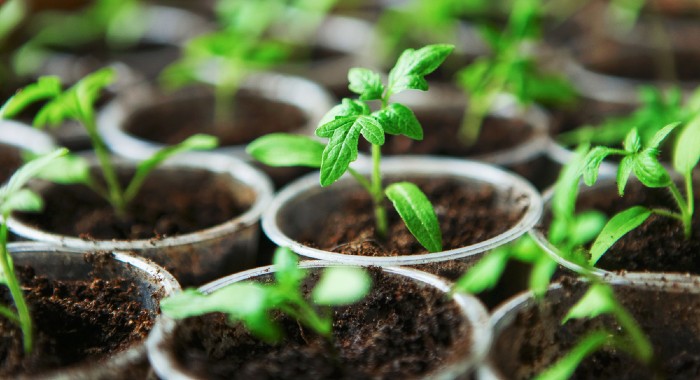
March/April is the ideal time to start sowing your tomato seeds. This will allow them to grow strong, ready to be planted out.
I always start mine off in March. I sow two seeds in one small pot using our homemade compost, and then leave them on a sunny windowsill.
You can also sow the seeds outside in late March/early April when the soil starts to warm up. But I find that growing tomato plants in the UK works best when you start them off indoors.
The UK weather can be variable in spring, so providing the right conditions outdoors for the tomato seeds to germinate is difficult.
How Often Do You Have To Water Tomatoes In The UK?

Tomatoes are thirsty plants and need watering regularly. However, their watering needs change as they grow. In the early stages, tomato plants need more water than in the later stage. (Zheng et al., 2016)
As they establish their roots and grow stronger, water them every day. Little but often is the key here. Once they have grown taller or bushy, I water them every other day, depending on the weather.
In our polytunnel, I water them more often if it’s really warm and sunny, because the soil will dry out quicker then. Outside, this is only necessary if we have really hot temperatures, like 30°C (86°F) and over.
If it’s raining, it’s not necessary to water your tomato plants outside. But don’t forget your tomatoes in the greenhouse or polytunnel.
Do Tomato Plants Need Feeding?
Yes, tomato plants benefit from being fed. I feed my seedlings whenever I repot them, and again once I have planted them into their bed. I use our own liquid fertiliser we get from our wormery. It’s one of the best liquid feeds for your vegetable plants.
It doesn’t just contain a wide host of nutrients, but also so-called probiotics, beneficial microorganisms. (Yatoo et al., 2021) They will increase the health of your soil and support your tomato plants.
Once your tomato plants have started to flower, feed them with a liquid feed high in potash. A study has shown that this is the optimal time to increase the yield. (Qihou et al., 2012)
This tomato feeder works great.

- The country’s favourite liquid concentrate plant food
- Produces 50 percent more yield
- For delicious tasting tomatoes and other vegetables

Apart from feeding tomatoes with liquid fertiliser, it’s also advisable to prepare the soil in your beds. Well-prepared soil will ensure strong and healthy tomato plants.
You can prepare your beds in autumn or spring, by digging in well-rotted organic matter. If you have a no-dig garden like me, add a layer of organic matter and don’t dig it in.
I add a layer of our homemade compost in autumn after all my vegetable plants have finished. Then in spring, I add a layer of our leaf mulch.
The mulch will perform three functions: first, it will suppress weeds, reducing the amount of weeding I have to do. Secondly, it will release nutrients slowly into the soil as it continues to break down.
Finally, it will help to warm up the soil and keep it warmer.
Can You Grow Tomatoes In Pots?

Yes, you can. You can even grow tomatoes in hanging baskets. Many people grow tomatoes in grow bags.
While both cordon and busy tomato varieties can be grown in pots, I would recommend the latter. As determinate tomatoes don’t grow as tall and therefore, don’t need support, they are better suited to be grown in pots.
What’s important when growing tomato plants in pots is that you use a big enough container. You want at least 30cm (12in) depth.
Because the soil in pots will dry out quicker, it’s important that you keep your tomato plants well watered, especially in hot and dry weather.
What Diseases Can Affect Tomato Plants In The UK?

Growing tomato plants in the UK can be a stress-free experience when the weather is fair, but if not, diseases can turn it into a nightmare.
There’re two diseases that mostly affect tomatoes in this country:
- Early and late blight – this fungal disease is very common across the country
- Grey mould – another fungal disease that affects the fruits
The telltale sign of a blight infection are brown spots on the leaves. These will move to the stems and eventually the fruits if nothing is done.
Grey mould will appear on the fruits, which makes them unedible.
Blight is one of those plant diseases that can’t be cured. So prevention is the best strategy. The good news is that the same measures will also keep grey mould at bay.
Both diseases thrive in humid conditions. But while blight prefers warm and wet wether, grey mould does best in cool and wet temperatures.
Here is what you can do to stop these diseases becoming an issue:
- Ensure good air circulation by giving your tomato plants enough space around them
- Practise crop rotation
- Remove any fallen leaves around the plant and weed the beds
- Water your plants from below, keeping the foliage as dry as possible
- Consider growing disease resistant varieties
- If you spot any signs of a disease, remove the infected part of the plant immediately and dispose of it. Don’t compost it
A healthy soil can also help your plants be more disease resistant. And healthy soil needs a diverse community of microorganisms.
Like our gut, soil also has a microbiome, which supports the growth of our plants, their health and resilience to stress. (Compant et al., 2019)
One way to keep your soil healthy is to convert to a no-dig garden, because digging distrurbs the microbiome. Adding a layer of organic matter to your beds every year will feed these beneficial microbes.
And there is such a thing as probiotics for soil. We use probiotics for the garden by Microbz. It’s easy to use and provides our soil with all it needs.
What Pests Can Attack Tomatoes In The UK?

When it comes to pests, there is one main one that might attack your tomato plants, aphids. These tiny little bugs love to suck the sap of the stems of most plants and they love tomatoes.
Small colonies aren’t likely to cause much trouble to healthy strong plants, but an infestation can even kill a plant. The good news is that you can stop these tiny little sap suckers from ruining your crops in many ways, and none include chemical pesticides.
- Companion planting can repel aphids – grow basil, garlic, onions, or leeks with your tomatoes and they will keep aphids away
- Encourage beneficial insects to your garden – aphids have many predators, such as lacewing and ladybirds, so make sure you attract them to your garden
- Remove aphids from your plants if you see them – this is only an option if you aren’t squeamish
- Wash your plants with insecticidal soap – one way to get rid of an infestation
No products found.
I only use the first two and don’t have an issue with aphids on any of my vegetables. We have created a wilflower meadow as part of our garden, which attracts plenty of beneficial insects that keep any pests under control.
And I always plant my tomato plants with other plants that will repel aphids and other pests.
If you’re growing your tomatoes in a greenhouse or polytunnel, whitefly might be an issue. They are winged little insects that also suck the sap of stems. The best way to keep them away is by planting basil with your tomato plants.
They don’t like the smell of this herb, so stay away. And you have the perfect herb to accompany your tomatoes in a salad.
Why Do I Have Problems With Growing My Tomatoes From Seed?
This can be caused by several reasons. It could be that your seeds were too old. The seed packet should have a sow by date. While seeds might still germinate even if sown after the sow by date, it’s less likely. Try to buy a new pack of seeds.
The soil could be too hot or too cold. Again, check the packet for the recommended germination temperature.
You can use a soil thermometer to keep an eye on the soil temperature.

- ESSENTIAL SOIL THERMOMETER - A popular soil temperature probe thermometer which can be used in the garden or greenhouse prior to sowing and planting
- STYLISH HANDY DESIGN! - This soil thermometer has a green plastic top to easily hold and insert into soil and compost. The temperature scale is also very clear to read.
- FANTASTIC VALUE - When it comes to soil thermometers, we only offer the best quality and accuracy and this item is just that!
Another reason could be that the soil was too wet or too dry. If the soil is too dry, the seeds won’t germinate. And if it is too wet, the seeds might rot. To avoid your seeds failing, make sure you thoroughly wet and drain the soil before sowing.
Keep an eye on the soil, and if the surface starts to dry out, put the pot in water and let the soil soak it up until the surface becomes moist. Then drain again to ensure it isn’t too wet.
Your seeds could also have been sown at the wrong depth. The seed packet normally indicates the depth the seed should be sown, so make sure you follow the instructions. As a rule of thumb, the bigger the seeds, the deeper they need to be sown. Small seeds, like tomatoes, only need a thin covering of compost.
Why Didn’t My Seedlings Survive?
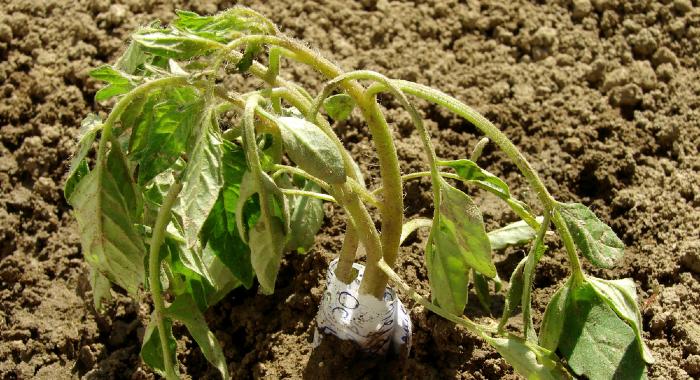
Again, it might be one of several reasons. The seedlings were transplanted too early or too late. Generally, seedlings are ready to be replanted when they have grown their first adult leaves.
These are the second set of leaves that grow. If the seedlings have been transplanted too late, they have absorbed all the nutrients in the soil, which can lead to diminished growth even after transplanting.
Especially with fast-growing plants like tomatoes, it is important to transplant the seedlings before they have taken up all the nutrients in the soil.
An indicator that you have left your seedlings too long is that they look sickly due to the lack of nutrients in the soil.
The seedlings might have been damaged during transplanting. Seedlings are delicate and fragile and can get damaged easily. Be careful when transplanting them. One way to transplant them safely is to press the pot on all sides to loosen the soil and then carefully pull the seedling with the soil out of the pot. Then transplant the seedling with the soil.
Another way to prevent your tomato seedlings from suffering from transplant shock is to start them using soil blocks. Soil blocks are just that, blocks of soil in which you plant your seeds. All you need is a soil blocker to produce your soil blocks. Read our article about soil blocks to learn more about this technique of growing from seed.
If your seedlings just died mysteriously, then it could be that they have been overwatered. This is called damping off and is caused by fungal diseases. So make sure you don’t overwater your seedlings.
Poor light can also cause the seedlings to grow thin and tall, which can cause them to fall over. Try to use the brightest spot in your house, ideally avoiding direct sunlight.
If your seedlings died after you planted them outside, it could be that the weather was not right.
Young plants can easily be damaged by cold, heat, wind, or heavy rain, so check what weather conditions your tomato seedlings need before planting them out.
Frost will kill them, so make sure you wait until after the last spring frost. You can also try to harden your plants to get them used to being outdoors, by putting them in a sheltered spot during the day and bringing them inside in the evening. After about a week, they should be ready for outdoors.
Can I Use Seeds From Shop-Bought Tomatoes?

The answer is yes, but there are two important things to look out for. Firstly, the variety of the tomatoes you bought. Most supermarket tomatoes are F1 hybrids (or first-generation hybrids). This means the plants you grow from their seeds will not be the same.
Instead, you want a heritage variety, which are open pollinated, as these will grow identical plants to the one they came from.
Examples of such open pollinated varieties are Gardener’s Delight, Cherokee Purple, Blondkopfchen and Black Cherry. Make sure the tomato seeds you buy will grow well in your climate.
Secondly, the tomatoes must be picked when fully ripe, otherwise the seeds will not be fertile. As tomatoes are generally picked when they are ripe, their seeds should be mature. If you struggle to find heritage tomatoes in your supermarket, buy seeds and use your own tomatoes in the following year.
You can scoop out the seeds and dry them on a piece of paper, and then plant them. Or you can also ferment them, which will make them cleaner and easier to store.
Read our article about saving tomato seeds to find out more.
Should I Use Grow Lights?
If you want to grow tomatoes inside into winter, then the answer is yes. Light is vital to the growth of any plant, but especially fruit-bearing plants such as tomatoes.
Grow lights can be quite expensive, but you will get a better result if you are using them.
Depending on the space you might want to buy overhead lights, like the WAKYME 600W LED Plant Grow Light.

- 【3-year Warranty】Updated Package(2020): 1x Grow light, 1x Thermometer Humidity Monitor, 2x Adjustable Rope, 1x Hanging Kit, 1x Power Cord, 1x User Manual. We offer a 3-year warranty and 30-day money-back guarantee. If you have any problems, please contact us.
- 【Optimal Full Spectrum】Different from others, this led grow light added 2PCS Yellow LED, is beneficial to the synthesis of photosynthetic pigments, promoting energy transmit, improving plant growth quality. It also has universal Blue, Red, IR, UV, White light. Blue and red led are an essential light for all plant growth. Expensive IR UV led can promote plants to defense mechanisms.
- 【Wide Coverage】60PCS SMD led(total 600W) provides uniform illumination. It can replace traditional 600-watt HPS/MH while consumes only 80 watts. Ensures maximum yield with minimum power usage and heat. PAR 436umol/m2s at 24” height, perfect for 2x2ft growing area(Maximum coverage area at 4x4ft at 24” height).
Or you can buy free-standing indoor plant grow lights, such as this Plant Grow Light.

- 【Four plant lamps and adjustable design】 The growth lamp is designed with 4 goose necks that can rotate 360°,meet the needs of multi-layer planting. provides a much wider coverage area than grow lamps with shorter LED bulbs in the market . it can emit light in any direction to provide energy to more plants. And you can easily control the distance and the angle between the light and plants. Also, the metal clip is very firm, with two anti-slip pads on it, maximum opening thickness is 6cm
- 【Sun-like Full Spectrum LED Grow Light】With 80 high-quality and high-efficiency LED beads, the wavelength is from 440nm to 660nm, which is similar to natural sunlight, full spectrum. Can be fully absorbed by plants to help accelerate the growth of different plants.Blue light (420nm-460nm) can promote plant germination and seedling growth, red light (630nm-660nm) can promote the plant flowering and fruiting
- 【Intelligent Timing/Memory Function】 The LED plant lamp has 3 timer setting options(3H/9H/12H). When the plants light is turned off, it will automatically remember the previous working state. After the next turn-on, the plants light will directly repeat the state of the last working work, no need to set it again. Plant light will be restarted automatically the next day without manual operation
Can Tomato Plants Be Saved For Next Year?
Technically yes. In South America, where tomatoes originally came from, they are perennial plants. This means they come back every year.
However, these plants are wild tomatoes, which are more like shrubs, which are relatively cold tolerant.
The cultivated tomatoes that we grow in our gardens are different. While they are still technically perennial plants, they have bred to be heat-dependent and are therefore very sensitive to cold.
Our cold winters will cause the tomato plants to die as soon as temperatures fall below 10°C.
So in order to keep your tomato plants alive, you have to move them to a warm and light place, where you can control the temperature.
Also, you can only overwinter determinate tomatoes as whole plants.
Ideally, move these to a heated greenhouse, where you can make sure they have the right temperature and as much light as possible.
While they will flower over winter, it is best to remove the flowers, because it costs the plant a lot of energy.
From indeterminate tomatoes you can take cuttings, however, which you can grow over winter and replant in Spring.
If you want to give it a go, make sure you only overwinter healthy plants. Tomato plants are at risk to catch late blight as it comes to the end of the season.
An infected plant will not overwinter, but die and might infect other plants in your greenhouse.
Here you go, all your questions about growing tomato plants in the UK answered. You’re ready to grow your own sweet tomatoes. Happy Growing!


